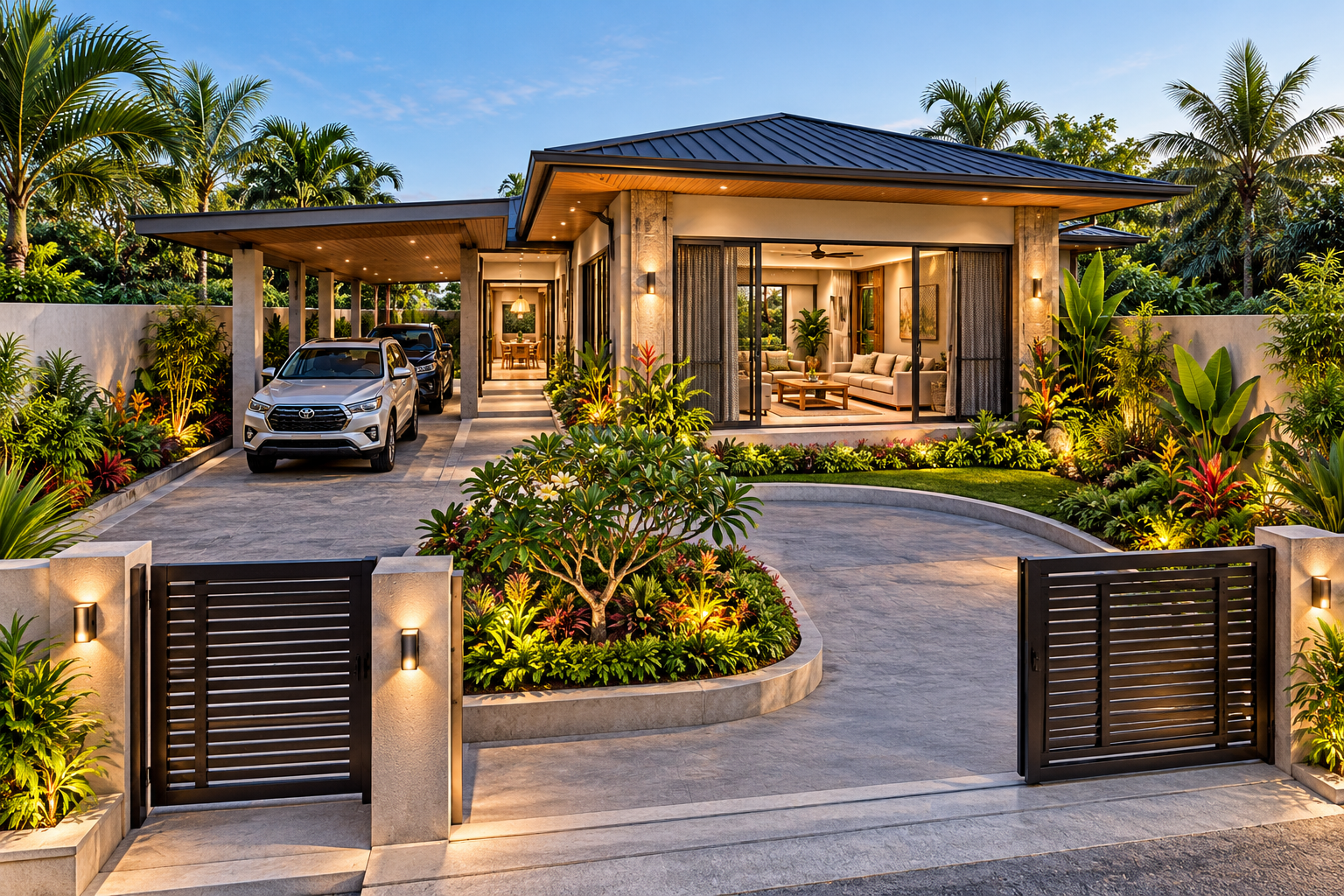
When designing a house in the Philippines, one of the first things we should think about is not how many air-conditioning units we can install, but how we can keep the house comfortable before we even turn them on.
That was one of the main ideas behind this house.
The design combines a modern, clean appearance with something very practical: natural ventilation, abundant daylight, protection from the tropical sun, and protection from mosquitoes and insects.
The result is a home that looks modern and elegant, but is still very much designed for the Philippine climate.
A House That Can Breathe
Most modern houses today are designed as sealed spaces. We close the windows, turn on the air-conditioner, and that’s how we stay comfortable.
There is nothing wrong with air-conditioning, especially in the Philippines. But it can become expensive when it has to run from morning until night.
This house takes a different approach.
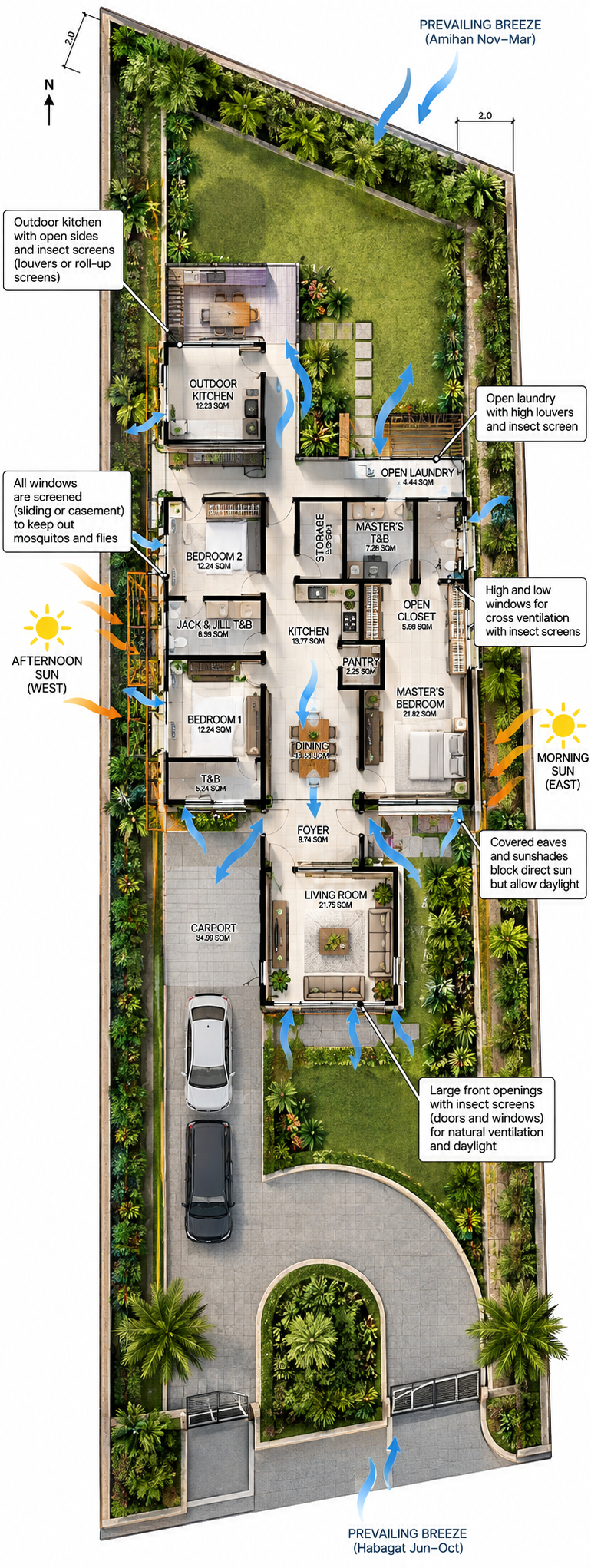
The windows are positioned so that, whenever the weather permits, air can enter through one side of the house and move through the interior before exiting through another opening.
This is called cross ventilation.
When there is a good breeze, you can open the screened windows and doors and allow the house to breathe naturally.
You don’t have to run an electric fan simply to move stagnant air around the room when the outdoor breeze can do some of that work for you.
The Windows Were Placed for a Reason
One of the most important parts of this design is the location and size of the windows.
We didn’t simply say, “Let’s put big windows everywhere.”
That can actually be a problem in a tropical climate.
Too much exposed glass, particularly on the wrong side of the house, can allow a tremendous amount of heat inside.
Instead, the windows are designed around several things:
- Where the sunlight comes from
- Where the prevailing breeze is likely to come from
- Which rooms need more ventilation
- Which rooms need more privacy
- Where furniture will be placed
- Where the best garden views are
- How rain will affect the openings
- How much direct sunlight the room should receive
The idea is to get the benefits of large windows without turning the house into a greenhouse.
Large Openings for the Living Room
The living room at the front of the house is one of the major connections between the interior and the garden.
Large glass openings allow plenty of daylight into the room and give the occupants a view of the landscaped front yard.
When the weather is comfortable, these openings can be opened to bring fresh air inside.
But there is an important detail: the openings should have insect screens.
This means you can open the glass doors without necessarily opening the house to every mosquito and fly in the neighborhood.
For larger sliding doors, retractable screens can be used so that they are almost invisible when not needed.
Keeping Mosquitoes Outside
This is particularly important in a naturally ventilated tropical house.
There is no point having beautiful open windows if everyone is afraid to use them because mosquitoes immediately come inside.
That is why insect screens are part of the design from the beginning.
Bedrooms, living areas and other important ventilation openings can have fine insect screens.
The high-level ventilation openings can also be screened.
The idea is simple:
Let the air in. Keep the insects out.
For the outdoor kitchen and laundry, screened louvers or other appropriate screening can provide ventilation while reducing the number of insects entering these areas.
The Bedrooms Need Fresh Air Too
The three bedrooms are designed with natural ventilation in mind, but the openings are more controlled than those in the living room.
Bedrooms need a balance between ventilation, privacy, daylight and protection from the afternoon sun.
The windows can therefore be positioned and sized according to the room’s orientation and furniture arrangement.
This allows the occupants to open the windows when conditions are comfortable while still having curtains, screens and shading available when necessary.
The master bedroom, in particular, has the opportunity to feel like a private tropical retreat, with natural light and garden views rather than a room completely disconnected from the outdoors.
Don’t Forget the High Windows
One of the less obvious features of this type of house is the use of high-level windows or clerestory openings.
Hot air rises.
So why trap it inside?
High openings provide another path for warm air to escape.
When lower windows are open, fresh air can enter. As warmer air rises, it can move toward the higher openings.
When the breeze is also moving across the house, the effect can be even better.
These high windows also have another advantage: they can bring daylight into parts of the house without requiring large windows at eye level.
Natural Light Without the Heat
There is a big difference between daylight and direct sunlight.
We want the first.
We don’t necessarily want the second pouring through every window.
That’s why the house uses large roof overhangs, covered areas and landscaping to control sunlight.
The roof shades the windows while still allowing plenty of natural light into the rooms.
This can make a surprisingly big difference.
During the day, the interior can remain bright and pleasant without switching on every light in the house.
The Roof Is Doing More Than Protecting You From Rain
The large roof overhang is one of the most important features of the design.
It protects the windows from direct sun and helps protect the walls from heavy tropical rain.
It also creates covered outdoor areas around the house.
And there’s another advantage.
When windows are protected by a generous overhang, they can sometimes remain open during light rain, allowing the house to continue receiving fresh air.
The roof therefore becomes part of the home’s passive cooling strategy rather than simply something placed on top of the building.
The Outdoor Kitchen Makes Sense in the Tropics
The outdoor kitchen at the rear of the property is another practical feature.
Cooking produces heat, steam and odors.
Why put all of that inside the main house if you don’t have to?
An outdoor kitchen provides a convenient place for grilling, Filipino cooking, parties and large family meals.
It also gives the homeowner another comfortable space to entertain.
With the right roof, lighting and insect screening, the outdoor kitchen can become a very useful extension of the home.
The Open Laundry Has a Purpose
The laundry area is another space where ventilation is particularly useful.
Laundry produces moisture, and moisture needs somewhere to go.
Rather than completely enclosing the laundry, the design allows it to remain naturally ventilated, with appropriate screening and high-level openings.
This can help the space dry faster and remain fresher.
The Landscaping Is Part of the Design
The tropical landscaping isn’t just there to make the house look beautiful.
Plants can provide shade, soften the heat around the building, improve privacy and create pleasant views from inside the house.
The key is not to create a solid wall of vegetation that blocks the breeze.
Instead, the planting should be arranged so that it provides shade and privacy while still allowing air to move.
Good drainage is also important. Landscaping should not create unnecessary areas of standing water, which can become breeding areas for mosquitoes.
Why the House Uses These Colors
The exterior combines warm white walls, natural stone, dark roofing and wood-colored soffits.
The warm white keeps the house looking clean and modern.
The stone adds texture and makes the building feel more substantial.
The dark roof gives the house a strong contemporary character.
The wood underneath the roof softens the appearance and adds warmth.
Then the tropical landscaping brings everything together.
The combination of white, natural stone, charcoal, wood and green vegetation gives the house a modern resort feel without making it look like a commercial resort.
It feels like a home.
The ICF Combination
This design would work particularly well with an ICF insulated wall system.
The idea is not to depend on insulation alone.
Instead, several strategies work together:
ICF walls help reduce heat transfer through the walls.
An insulated roof reduces heat entering from above.
Large roof overhangs shade windows and walls.
Screens allow natural ventilation without inviting insects inside.
Strategic windows provide daylight and cross ventilation.
Landscaping provides additional shade and privacy.
Together, these features create a much more complete tropical house.
Will You Still Need Air-Conditioning?
Yes—and that’s perfectly fine.
This isn’t a claim that a house in Cebu, Bohol, Camiguin or another tropical location will never need air-conditioning.
There will be very hot and humid days when you will want it.
There will also be nights when you simply want the bedroom cold.
The idea is to give the homeowner a choice.
On a pleasant morning, you might open the screened windows and let the breeze come through.
During a comfortable afternoon, you might use the ceiling fans instead of the AC.
In the evening, you might open the screened doors and enjoy the garden.
And when the temperature becomes uncomfortable, you close the openings and turn on the air-conditioning.
The house works with you instead of forcing you to use mechanical cooling all the time.
More Than Just a Beautiful House
What I like most about this design is that the modern appearance isn’t separate from its practical features.
The large windows aren’t there just to look expensive.
The roof isn’t oversized just for appearance.
The landscaping isn’t simply decoration.
The screens aren’t an afterthought.
Each element has a job.
The windows bring in light and air.
The roof provides shade.
The screens allow ventilation without inviting mosquitoes inside.
The landscaping provides shade, privacy and greenery.
The high openings help release warm air.
The insulated walls reduce heat transfer.
And the outdoor spaces make the house feel larger and more connected to nature.
In the end, the goal is quite simple:
A home that is bright without being hot.
A home that is open without being full of mosquitoes.
A home that is naturally ventilated without giving up air-conditioning when you need it.
A modern home that still feels comfortable in the Philippine climate.
That’s what makes this Modern Tropical Home different.
It isn’t simply designed to look good in a rendering.
It is designed around the way people actually live in the tropics.
Beautiful. Practical. Bright. Breezy. And built for Philippine living.